|
|
News Center
Jun 13, 2013
Berkeley Engineering
$20 million Jacobs Foundation gift to launch design innovation institute
A $20 million gift from the Paul and Stacy Jacobs Foundation, announced Thursday at the Clinton Global Initiative America meeting in Chicago, will underwrite a new institute for design innovation at the UC Berkeley College of Engineering that will expand the role of design in engineering education, emphasizing rapid design and prototyping for manufacturability.
Jun 13, 2013
Contra Costa Times
Cal EECS professor receives prestigious international award
Electrical engineering and computer science professor Eli Yablonovitch is one of two recipients of the 2012 Harvey Prize, a prestigious international award for his "pioneering discoveries in photonics, optoelectronics, and semiconductors."
Jun 12, 2013
Scientific American
Small gadgets that make you healthier
A new movement that combines traditional medical record keeping and public health surveillance with data mining and mobile phone technologies holds great promise for patients and researchers alike. Steven DeMello, director of health care at CITRIS, says mobile diagnosis and surveillance could help blunt the impact of changing demographic trends.
Jun 11, 2013
Nature
Computer memory can be read with a flash of light
Modern computer memory technologies come with a trade-off between speed and retention time. But a prototype memory device, co-developed by Berkeley Engineering materials scientist Ramamoorthy Ramesh, combines speed, endurance and low power consumption by uniting electronic storage with a readout based on the physics that powers solar panels.
Jun 11, 2013
UC Berkeley NewsCenter
Lydia Sohn among Bakar Fellows pursuing path to marketplace
Mechanical engineer Lydia Sohn is one of five UC Berkeley scientists awarded Bakar Fellowships to help take their lab-bench discoveries into the marketplace. Sohn, an associate professor and member of the Berkeley Stem Cell Center, will look for ways to screen for metastatic cancer cells that have been shed from breast tumors and are circulating in the blood threatening to establish satellite tumors.
Jun 05, 2013
UC Berkeley NewsCenter
To improve today’s concrete, do as the Romans did
In a quest to make concrete more durable and sustainable, a UC Berkeley-led team of geologists and engineers has found inspiration in the ancient Romans, whose massive concrete structures have withstood the elements for more than 2,000 years.
Jun 05, 2013
IEEE Spectrum
Berkeley's little legged robots grow wings and tails
Berkeley Engineering students have been exploring what you can do when you give ground robots bio-inspired accessories, and they've got some little legged robots doing cool new stuff thanks to the addition of wings and tails.
May 30, 2013
iCyPhy
Academic-industrial team to uncover innovations in systems engineering
UC Berkeley has partnered with Caltech, IBM and United Technologies Corp. to launch Industrial Cyber Physical Systems (iCyPhy), a Berkeley-based research consortium that will identify and develop new engineering techniques to make it easier to successfully build products and services that combine complex software, hardware and mechanical components.
May 29, 2013
San Francisco Chronicle
Bolts along Bay Bridge bike path fail
Civil engineering professor Bob Bea comments on yet another problem with bolts on the new span of the San Francisco Bay Bridge, currently under construction: "This is not pretty. … If we are being challenged by straightforward, simple things, it raises serious questions about what we've done on complex situations."
May 28, 2013
UC Berkeley NewsCenter
Berkeley engineers create new light-controlled gel
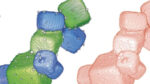
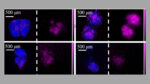
Inspired by the way plants grow toward light sources, a phenomenon known as phototropism, UC Berkeley bioengineers have created a hydrogel that could be manipulated by light.
May 23, 2013
New York Times
Engineers see a path out of green card limbo
In a video and story, foreign engineering graduate students at U.C. Berkeley reflect on how immigration reform could make it easier for highly skilled workers like them to stay in the United States.
May 20, 2013
Sacramento Bee
Corrosion plagues new Bay Bridge span
A comprehensive investigation by the Sacramento Bee of constructions problems on the new Bay Bridge quotes Berkeley materials science & engineering professor Thomas Devine as saying Caltrans used the wrong tests for corrosion, resulting in "essentially useless" findings. He called the agency's research "woefully inadequate" and "meaningless" for detecting "environmentally assisted cracking."
|